CRC

Biomarkers

The diagnosis of CRC typically involves stool tests or a colonoscopy. Following diagnosis, MMR, MSI, and CEA are tested across all stages to provide crucial prognostic information. Biomarker testing for targeted therapies is not typically required in early-stage CRC.1,2

Biomarker testing is an essential part of the patient care strategy in metastatic CRC (mCRC), identifying specific biological drivers of a patient's tumor. It also plays a critical role in distinguishing between acquired and germline mutations, which may influence disease progression.3,4

To obtain samples for diagnostic testing, gastroenterologists or colorectal surgeons use several biopsy methods, with endoscopic biopsy being the most common. Following diagnosis, these samples may undergo testing to identify actionable biomarkers that may inform patient care.5​

Actionable AND EMERGING Biomarkers

The biomarkers shown here are actionable and emerging and may be tested in metastatic CRC.6-10​

Protein Expression6,7

c-Met (MET)

HER2

EXAMPLE OF IHC

Genomic Profiling8-10

BRAF V600E mutation

BRAF non-V600E mutations

KRAS/NRAS mutations

NTRK fusions

ERBB2 amplification

RET fusions

Tumor mutational burden

Microsatellite instability

EXAMPLES OF NGS AND PCR

IHC
NGS and/or PCR
Emerging biomarkers
The biomarkers listed are not comprehensive and may not include all biomarkers available for testing. This may include biomarkers that are emerging.

DETECTING BIOMARKERS IN CRC

While many biomarkers signal through similar pathways, whether the biomarker is protein-based or DNA- or RNA-based dictates the type of biomarker test that is required to detect the alteration.1​1,12

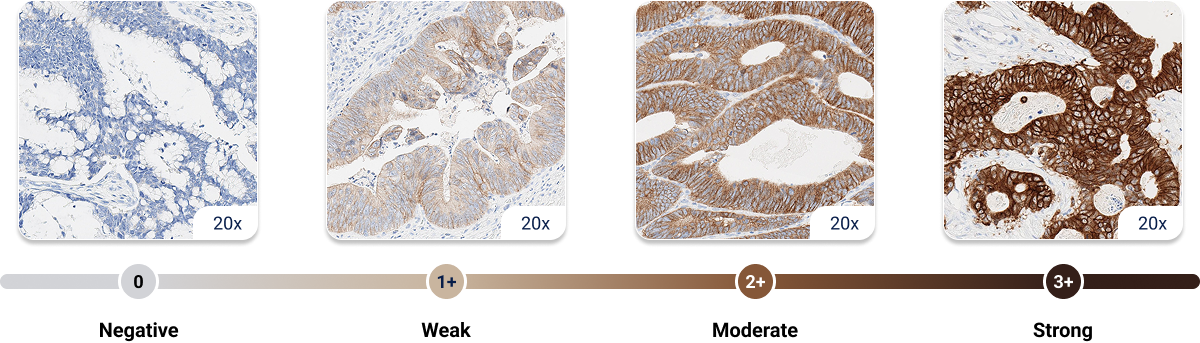
EXAMPLE OF PROTEIN EXPRESSION—C-MET (MET) VIA IHC

IHC is a widely used technique that leverages antibodies to detect specific proteins in tissues and provides spatial context, allowing for direct visualization of protein expression within the tissue architecture​.13-16​

Sample Preparation17,18

  • ​Sample collection
  • Sample fixation
  • Cut sections for staining

Staining17-19

  • ​Assess tissue quality
  • Appropriate positive and negative controls
  • Staining with antibody that directly targets the protein biomarker

Assessment17,19

  • ​Percentage of tumor cells and/or immune cells
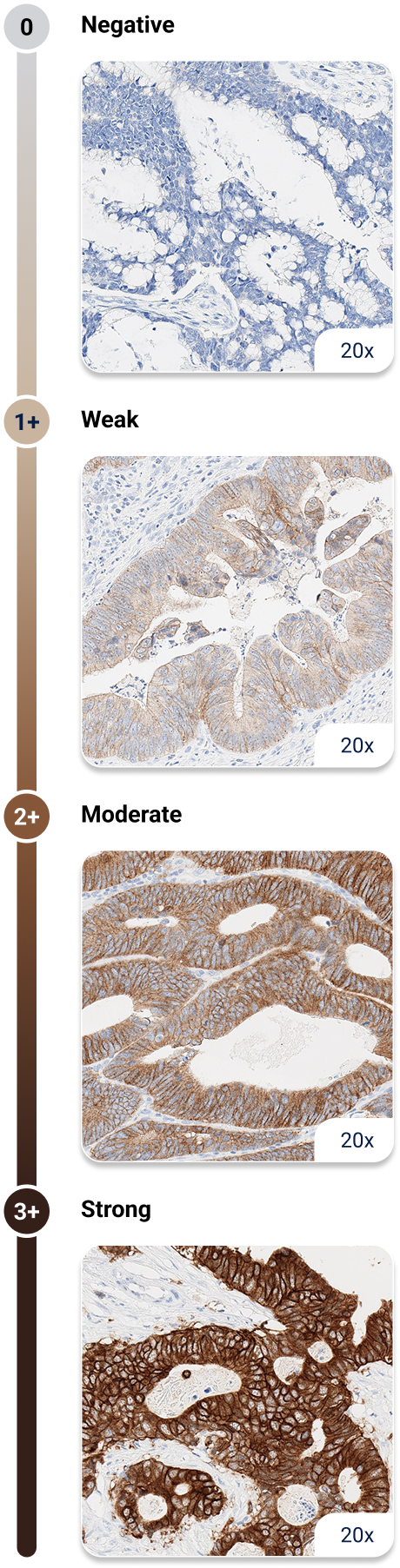
  • Staining intensity

Example Representative Staining Intensities19​

Images are for illustrative purposes only.
c-Met (MET) protein overexpression is an emerging biomarker in CRC and in clinical research as a potential therapeutic target. There is no FDA-approved test for c-Met (MET) protein overexpression in CRC.

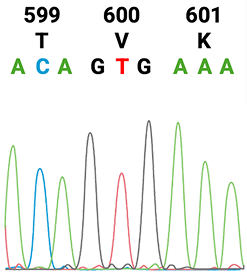
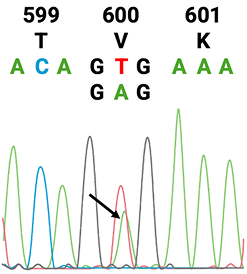
EXAMPLE OF GENOMIC PROFILING—BRAF MUTATION

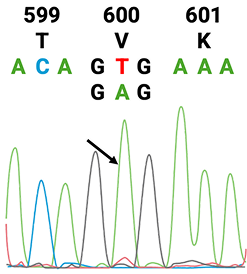
Next-generation Sequencing (NGS)

NGS is a high-throughput approach that allows for sequencing of multiple genes or whole genomes simultaneously to allow pathologists to detect several aberrations at once​.20,21​

Nucleic Acid Extraction22

  • ​Sample collection
  • DNA/RNA extraction
  • Quality control

Library Preparation22

  • ​Adaptor ligation and barcoding
  • Size selection
  • Amplification/purification
  • Quality control

Sequencing and Analysis22

  • Sequencing
  • Data analysis, including base calling, read alignment, variant calling, and variant annotation

Example BRAF V600E NGS Result23

Allele frequency: 0%
Allele frequency: 33%
Allele frequency: 87%
Image adapted from Ihle MA, et al. BMC Cancer. 2014;14:13.

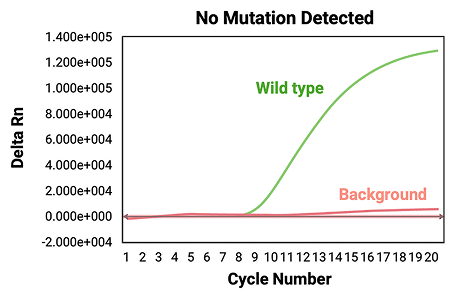
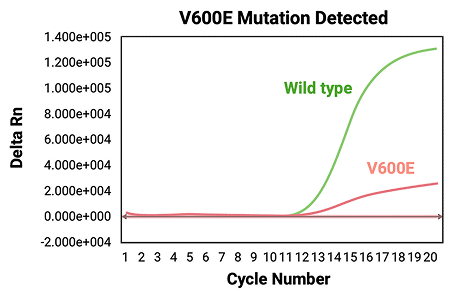
Polymerase Chain Reaction (PCR)

PCR is a common molecular method for detecting gene mutations—typically targeting and amplifying a specific gene—and is considered to be a rapid and sensitive assay.24-26​

Sample Preparation27

  • ​Sample collection
  • Nucleic acid extraction
  • Reverse transcription (if applicable)

Thermal Cycling27

  • Denaturation
  • Annealing
  • Extension or elongation

Detection and Analysis27

  • ​Determine if the target was amplified
  • Result interpretation

Example BRAF V600E PCR Readout28

Image adapted from TrimGen Genetic Diagnostics.
AKT=protein kinase B (or PKB); BRAF=B-raf proto-oncogene, serine/threonine kinase; CAP=College of American Pathologists; CEA=carcinoembryonic antigen; c-Met/MET=mesenchymal-epithelial transition; CRC=colorectal cancer; EGFR=epidermal growth factor receptor; ERBB2=erb-b2 receptor tyrosine kinase 2; ERK=extracellular signal-regulated kinase; FGFR=fibroblast growth factor receptor; HER2=human epidermal growth factor receptor 2; IHC=immunohistochemistry; KRAS=Kirsten rat sarcoma virus; MEK=mitogen-activated protein kinase kinase; MMR=mismatch repair; MSI=microsatellite instability; mTOR=mammalian target of rapamycin; NCCN=National Comprehensive Cancer Network; NF-ᴋB=nuclear factor kappa-light-chain-enhancer of activated B cells; NGS=next-generation sequencing; NRAS=neuroblastoma RAS viral oncogene homolog; NTRK=neurotrophic receptor tyrosine kinase; PCR=polymerase chain reaction; PDGFR=platelet-derived growth factor receptor; PI3K=phosphatidylinositol 3-kinases; RAF=rapidly accelerated fibrosarcoma; RAS=rat sarcoma virus protein; RET=ret proto-oncogene; TRK=tropomyosin receptor kinase.
References
1. American Cancer Society. Colorectal Cancer Early Detection, Diagnosis, and Staging. January 29, 2024. Accessed August 15, 2025. https://www.cancer.org/cancer/types/colon-rectal-cancer/detection-diagnosis-staging/staged.html. 2. Wang R, et al. World Gastrointest Surg. 2023;15(12):2907-2918. doi:10.4240/wjgs.v15.i12.2907. 3. Adekunle AD, et al. JAMA Netw Open. 2024;7(7):e2419110. doi:10.1001/jamanetworkopen.2024.19110. 4. Kasi A, et al. Curr Colorectal Cancer Rep. 2020;16(5):97-106. doi:10.1007/s11888-020-00458-z. 5. Saridaki Z, et al. Br J Cancer. 2015;113(6):914-920. doi:10.1038/bjc.2015.307. 6. Armstrong GR, et al. Int J Exp Pathol. 2021;102(3):172-178. doi:10.1111/iep.12395. 7. Suwaidan AA, et al. Cancer Treat Rev. 2022;105:102363. doi:10.1016/j.ctrv.2022.102363. 8. Lee MKC, Loree JM. Curr Oncol. 2019;26(Suppl 1):S7-S15. doi:10.3747/co.26.5719. 9. Jan YH, et al. Br J Cancer. 2022;127(7):1304-1311. doi:10.1038/s41416-022-01913-4. 10. Pietrantonio F, et al. Ann Oncol. 2018;29(6):1394-1401. doi:10.1093/annonc/mdy090. 11. Qamsari ES, et al. Tumor Biol. 2017;39(5):101042317699118. doi:10.1177/101042831769911. 12. Alese OB, et al. Am Soc Clin Oncol Educ Book. 2023;43:e389574. doi:10.1200/EDBK_389574. 13. Hawes D, et al. Mod Surg Pathol. 2009:48-70. doi:10.1016/B978-1-4160-3966-2.00016-3. 14. McCampbell AS, et al. Appl Immunohistochem Mol Morphol. 2019;27(5):345-355. doi:10.1097/PAI.0000000000000593. 15. Fedchenko N, Reifenrath J. Diagn Pathol. 2014;9:221. doi:10.1186/s13000-014-0221-9. 16. Kim SW, et al. J Pathol Transl Med. 2016;50(6):411-418. doi:10.4132/jptm.2016.08.08. 17. Bradley CA, et al. Oncotarget. 2016;7(48):78932-78945. doi:10.18632/oncotarget.12933. 18. Lee SJ, et al. Clin Colorectal Cancer. 2018;17(3):165-169. doi:10.1016/j.clcc.2018.02.013. 19. Ha SY, et al. Mod Pathol. 2013;26(12):1632-1641. doi:10.1038/modpathol.2013.108. 20. Lin CL, et al. Life (Basel). 2021;11(9):890. doi:10.3390/life11090890. 21. Vendrell JA, et al. Oncotarget. 2017;8(25):40345-40358. doi:10.18632/oncotarget.15875. 22. NGS Workflow and Fundamentals of Sample Preparation. Enzo. Accessed December 1, 2025. https://www.enzo.com/note/ngs-workflow-and-fundamentals-of-sample-preparation/. 23. Ihle MA, et al. BMC Cancer. 2014;14:13. doi:10.1186/1471-2407-14-13. 24. Sarhadi VK, Armengol G. Biomolecules. 2022;12(8):1021. doi:10.3390/biom12081021. 25. Ruiz C, et al. Hum Mutat. 2020;41(5):1051-1068. doi:10.1002/humu.23987. 26. Khehra N, et al. National Library of Medicine, National Center for Biotechnology Information. Polymerase Chain Reaction (PCR). March 6, 2023. Accessed July 31, 2025. https://www.ncbi.nlm.nih.gov/books/NBK589663/. 27. From RNA to results: the essential guide to RT-PCR. Integra Biosciences. Accessed December 1, 2025. https://www.integra-biosciences.com/global/en/blog/article/rna-results-essential-guide-rt-pcr. 28. Real-time PCR-based BRAF mutation detection. TrimGen Genetic Diagnostics. Accessed December 1, 2025. https://www.trimgen.com/products/braf-mutation-detection-reagent-kit-real-time-PCR.

    References
    1. Remon J, Hendriks LEL, Mountzios G, et al. J Thorac Oncol. 2023;18(4):419-435. doi:10.1016/j.jtho.2022.10.015.
    2. Han Y, Yu Y, Miao D, et al. JTO Clin Res Rep. 2024;5(2):100630. doi:10.1016/j.jtocrr.2023.100630.
    3. Altintas DM, Comoglio PM. Cancers (Basel). 2023;15(18):4672. doi:10.3390/cancers15184672.
    4. Liang H, Wang M. Onco Targets Ther. 2020;13:2491-2510. doi:10.2147/OTT.S231257.
    5. Park S, Choi YL, Sung CO, et al. Histol Histopathol. 2012;27(2):197-207. doi:10.14670/HH-27.197.
    6. Sun W, Song L, Ai T, et al. J Biomed Res. 2013;27(3):220-230. doi:10.7555/JBR.27.20130004.
    7. Socinski MA, Pennell NA, Davies KD. JCO Precis Oncol. 2021;5:PO.20.00516. doi:10.1200/PO.20.00516.
    8. Drusbosky LM, Dawar R, Rodriguez E, Ikpeazu CV. J Hematol Oncol. 2021;14(1)129. doi:10.1186/s13045-021-01138-7.
    9. Sierra JR, Tsao MS. Ther Adv Med Oncol. 2011;3(1 Suppl):S21-35. doi:10.1177/1758834011422557.
    10. Yin W, Guo M, Tang Z, et al. Cancers (Basel). 2022;14(10):2433. doi:10.3390/cancers14102433.
    11. Ding C, Qiu Y, Zhang J, et al. BMC Pulm Med. 2023;23(1):240. doi:10.1186/s12890-023-02482-9.
    12. Coleman N, Hong L, Zhang J, et al. ESMO Open. 2021;6(6):100319. doi:10.1016/j.esmoop.2021.100319.
    13. Settleman J. Curr Biol. 2012;22(2):R43-4. doi:10.1016/j.cub.2011.11.004.
    14. Qin K, Hong L, Zhang J, et al. Cancers (Basel). 2023;15(3):612. doi:10.3390/cancers15030612.
    15. Hartmaier RJ, Markovets AA, Ahn MJ, et al. Cancer Discov. 2023;13(1):98-113. doi:10.1158/2159-8290.CD-22-0586.
    16. Xiang C, Lv X, Chen K, et al. Mod Pathol. 2024;37(4):100451. doi:10.1016/j.modpat.2024.100451.
    17. Heydt C, Ihle MA, Merkelbach-Bruse S. Cancers (Basel). 2023;15(11):2932. doi:10.3390/cancers15112932.
    18. Mazieres J, Vioix H, Pfeiffer BM, et al. Clin Lung Cancer. 2023;24(6):483-497. doi:10.1016/j.cllc.2023.06.008.
    19. Reischmann N, Schmelas C, Molina-Vila MA, et al. iScience. 2023;26(7);107006. doi:10.1016/j.isci.2023.107006.
    20. Friedlaender A, Drilon A, Banna GL, et al. Cancer. 2020;26(22):4826-4837. doi:10.1002/cncr.33159.