MET in NSCLC

c-Met (MET) protein expression, METex14 skipping mutation, MET focal gene amplification

BIOLOGY

Under normal conditions, the HGF/MET pathway is responsible for cell functions such as growth and proliferation. Dysregulation of this pathway can lead to oncogenic changes such as tumor cell growth, invasion, and metastasis. Multiple mechanisms are implicated in MET dysregulation including protein expression, gene amplification, and gene mutation.1​

Testing Considerations

Testing modality differs based on the type of MET aberration under investigation. There is no single test that can identify all 3 MET aberrations.1​

Biomarker

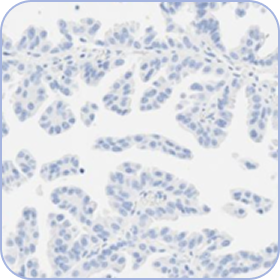
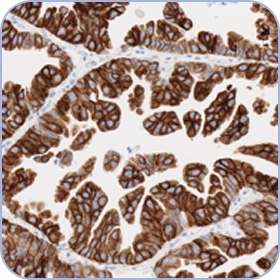
c-Met (MET) Protein Expression1,2

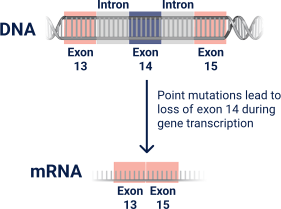
MET Exon 14 Skipping Mutation1,3,4

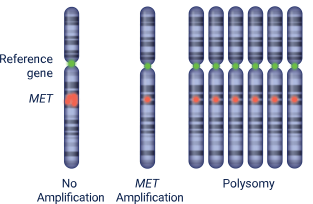
MET Focal Gene Amplification1-4​

Biomarker Type

Protein
Genomic
Genomic

Testing Modality

IHC
NGS, PCR
NGS, PCR, FISH
Images are for illustrative purposes only.
Negative
Positive

Relevant Resources

Learn more about MET aberrations in NSCLC by visiting DISCOVER-MET.com
c-Met/MET=mesenchymal-epithelial transition; ex14=exon 14; FISH=fluorescence in situ hybridization; HGF=hepatocyte growth factor; IHC=immunohistochemistry; NGS=next-generation sequencing; NSCLC=non-small cell lung cancer; PCR=polymerase chain reaction; TKI=tyrosine kinase inhibitor.
References
1. Spitaleri G, et al. Cancers (Basel). 2023;15(19):4779. doi:10.3390/cancers15194779. 2. Qin K, et al. Cancers (Basel). 2023;15(3):612. doi:10.3390/cancers15030612. 3. Hsu R, et al. Cancers (Basel). 2023;15(14):3561. doi:10.3390/cancers15143561. 4. Le X, et al. Abstract presented at: ASCO 2022; June 3-7, 2022; Chicago, IL. 5. Dumontet C, et al. Nat Rev Drug Discov. 2023;22(8):641-661. doi:10.1038/s41573-023-00709-2. 6. Kumar R, et al. Med Drug Discov. 2024:23:100195. doi:10.1016/j.medidd.2024.100195.
    References
    1. Remon J, Hendriks LEL, Mountzios G, et al. J Thorac Oncol. 2023;18(4):419-435. doi:10.1016/j.jtho.2022.10.015.
    2. Han Y, Yu Y, Miao D, et al. JTO Clin Res Rep. 2024;5(2):100630. doi:10.1016/j.jtocrr.2023.100630.
    3. Altintas DM, Comoglio PM. Cancers (Basel). 2023;15(18):4672. doi:10.3390/cancers15184672.
    4. Liang H, Wang M. Onco Targets Ther. 2020;13:2491-2510. doi:10.2147/OTT.S231257.
    5. Park S, Choi YL, Sung CO, et al. Histol Histopathol. 2012;27(2):197-207. doi:10.14670/HH-27.197.
    6. Sun W, Song L, Ai T, et al. J Biomed Res. 2013;27(3):220-230. doi:10.7555/JBR.27.20130004.
    7. Socinski MA, Pennell NA, Davies KD. JCO Precis Oncol. 2021;5:PO.20.00516. doi:10.1200/PO.20.00516.
    8. Drusbosky LM, Dawar R, Rodriguez E, Ikpeazu CV. J Hematol Oncol. 2021;14(1)129. doi:10.1186/s13045-021-01138-7.
    9. Sierra JR, Tsao MS. Ther Adv Med Oncol. 2011;3(1 Suppl):S21-35. doi:10.1177/1758834011422557.
    10. Yin W, Guo M, Tang Z, et al. Cancers (Basel). 2022;14(10):2433. doi:10.3390/cancers14102433.
    11. Ding C, Qiu Y, Zhang J, et al. BMC Pulm Med. 2023;23(1):240. doi:10.1186/s12890-023-02482-9.
    12. Coleman N, Hong L, Zhang J, et al. ESMO Open. 2021;6(6):100319. doi:10.1016/j.esmoop.2021.100319.
    13. Settleman J. Curr Biol. 2012;22(2):R43-4. doi:10.1016/j.cub.2011.11.004.
    14. Qin K, Hong L, Zhang J, et al. Cancers (Basel). 2023;15(3):612. doi:10.3390/cancers15030612.
    15. Hartmaier RJ, Markovets AA, Ahn MJ, et al. Cancer Discov. 2023;13(1):98-113. doi:10.1158/2159-8290.CD-22-0586.
    16. Xiang C, Lv X, Chen K, et al. Mod Pathol. 2024;37(4):100451. doi:10.1016/j.modpat.2024.100451.
    17. Heydt C, Ihle MA, Merkelbach-Bruse S. Cancers (Basel). 2023;15(11):2932. doi:10.3390/cancers15112932.
    18. Mazieres J, Vioix H, Pfeiffer BM, et al. Clin Lung Cancer. 2023;24(6):483-497. doi:10.1016/j.cllc.2023.06.008.
    19. Reischmann N, Schmelas C, Molina-Vila MA, et al. iScience. 2023;26(7);107006. doi:10.1016/j.isci.2023.107006.
    20. Friedlaender A, Drilon A, Banna GL, et al. Cancer. 2020;26(22):4826-4837. doi:10.1002/cncr.33159.