NSCLC

Disease State

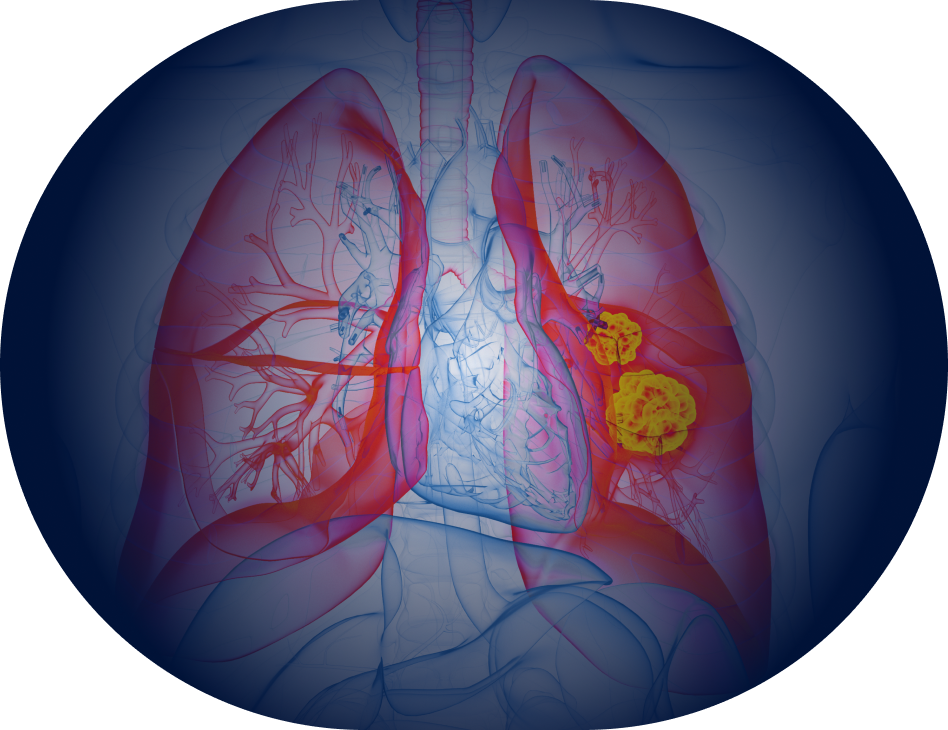
Non-small cell lung cancer (NSCLC) is the most common cancer worldwide and is often diagnosed at later stages.1,2 Optimized therapeutic approaches hinge upon a robust understanding of the underlying disease biology.3

Patient and Disease Characteristics

Epidemiology

Lung cancer in the US remains a leading cause of cancer-related deaths, and non-small cell lung cancer (NSCLC) accounts for ~87% of lung cancer cases.1,2

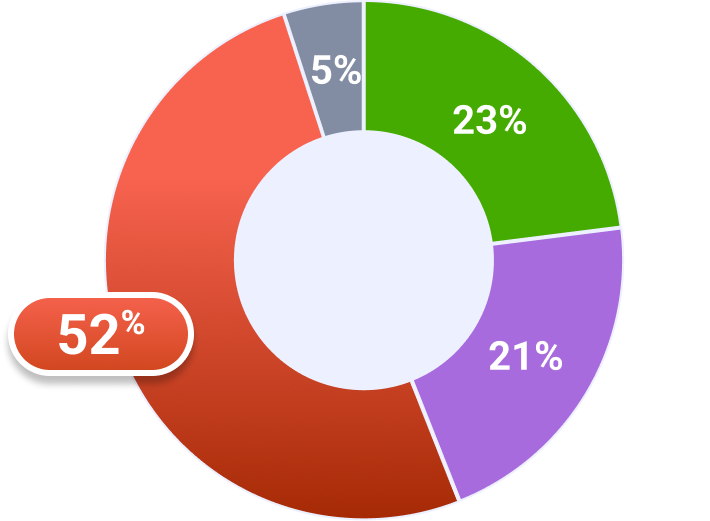
Percent of Lung Cancer Cases by Stage at Diagnosis4​

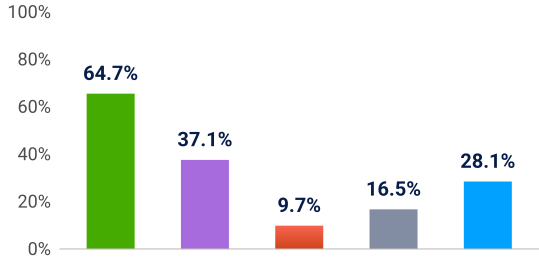
5-year Relative Survival by Stage at Diagnosis4

Localized
Regional
Distant
Unknown
5-year Relative Survival (all stages)

Non-specific symptomatology often contributes to late-stage diagnosis and poor prognosis in NSCLC.2 Approximately 40–50% of NSCLC tumors harbor actionable genomic alterations (AGAs). AGAs can impact patient care and clinical outcomes.5​

Pathobiology

Genomic aberrations that can impact signaling pathways may drive NSCLC tumor initiation, growth, and metastasis. Mutations resulting in oncogene activation and the inactivation of tumor suppressor genes are central targets of treatments for NSCLC.6,7

Patient and Disease Characteristics

Patient care in NSCLC relies on a unique understanding of each patient’s disease. Precision medicine integrates several layers of information to develop a tailored patient care strategy. Because NSCLC is often diagnosed at advanced stages where surgical resection is not an option, it is crucial to test for actionable biomarkers both at initial diagnosis and upon disease progression.6,8,9

Patient Care Plan

Patient history and characteristics8,9

Stage of disease8​

NSCLC subtypes8

Tumor and molecular
characteristics8

Genetics
Age
Environment
Smoking history
Family history
Early stage
Locally advanced
Metastatic
Large cell carcinoma
Squamous cell carcinoma
Adenocarcinoma
Not otherwise specified
Actionable biomarkers
Tumor growth/location
Tumor mutational burden

Patient history and characteristics8,9

Genetics
Age
Environment
Smoking history
Family history

Stage of disease8​

Early stage
Locally advanced
Metastatic

NSCLC subtypes8

Large cell carcinoma
Squamous cell carcinoma
Adenocarcinoma
Not otherwise specified

Tumor and molecular
characteristics8

Actionable biomarkers
Tumor growth/location
Tumor mutational burden
AGAs=actionable genomic alterations; BRAF=B-Raf proto-oncogene, serine/threonine kinase; EGFR=epidermal growth factor receptor; ERK=extracellular signal-regulated kinase; KRAS=Kirsten rat sarcoma virus; MEK=mitogen-activated protein kinase kinase; MET=mesenchymal-epithelial transitions; NSCLC=non-small cell lung cancer; US=United States.

Learn more about select biomarkers in NSCLC

References
    1. Bray F, et al. CA Cancer J Clin. 2024;74(3):229-263. doi:10.3322/caac.21834. 2. Yale Medicine. Non-Small Cell Lung Cancer. Accessed August 11, 2025. https://www.yalemedicine.org/conditions/non-small-cell-lung-cancer. 3. Roy-Chowdhuri S, et al. Cancer. 2024;130(24):4200-4212. doi:10.1002/cncr.34926. 4. National Cancer Institute, Surveillance, Epidemiology, and End Results Program. Cancer Stat Facts: Lung and Bronchus Cancer. Accessed August 12, 2025. https://seer.cancer.gov/statfacts/html/lungb.html. 5. Attili I, et al. J Clin Med. 2024;13(15):4476. doi:10.3390/jcm13154476. 6. Tahayneh K, et al. J Clin Med. 2025;14(3):1025. doi:10.3390/jcm14031025. 7. Xu J, et al. Am J Clin Oncol. 2024;47(6):291-303. doi:10.1097/COC.0000000000001088. 8. National Cancer Institute. Non-Small Cell Lung Cancer Treatment (PDQ®)–Health Professional Version. Accessed August 12, 2025. https://www.cancer.gov/types/lung/hp/non-small-cell-lung-treatment-pdq. 9. Hirsch FR, Kim C. Oncol Ther. 2024;12(2):223-231. doi:10.1007/s40487-024-00271-w.